
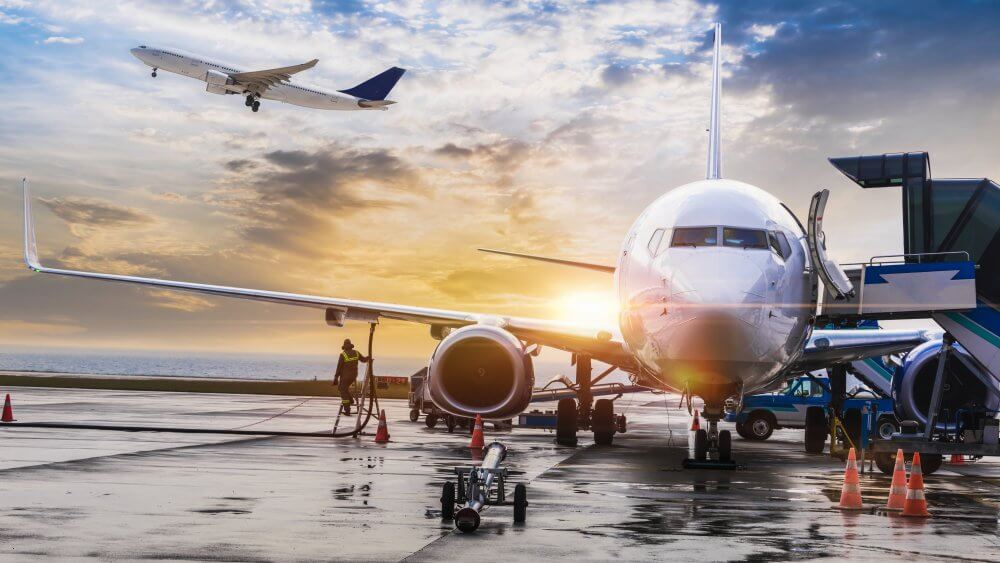
August 19 is National Aviation Day, which celebrates the pioneers, technologies, and innovations that have transformed air travel. While airplanes are often viewed as marvels of engineering, there’s another science working behind the scenes every time a plane takes off: chemistry.
From the materials that make modern aircraft lighter and stronger to the technologies helping improve fuel efficiency and passenger comfort, chemistry plays a role in helping millions of people travel safely around the world.
A few examples of how chemistry helps make airplanes fly
- Carbon fiber composites are used in aircraft bodies, wings, and tail structures because they offer exceptional strength while weighing significantly less than traditional metals. A lighter aircraft needs less fuel, helping airlines reduce operating costs and improve efficiency. These advanced materials have helped make longer flights and greater fuel economy possible.
- Epoxy resins help bind carbon fibers together to create advanced composite materials used in aircraft wings, fuselages, and other structural components. These materials combine lightweight performance with strength and durability, helping airplanes stand up to years of temperature changes, pressure cycles, and demanding operating conditions.
- Advanced adhesives and sealants help hold aircraft components together, seal fuel tanks, and protect against corrosion without adding unnecessary weight. These high-performance materials create durable bonds that can withstand vibration, pressure changes, temperature extremes, and years of service. By helping aircraft stay strong, lightweight, and resistant to environmental wear, they contribute to safer and more efficient air travel.
- Protective coatings and paints shield aircraft from ultraviolet radiation, moisture, temperature extremes, and corrosion. During a typical flight, an airplane may move from hot, sunny conditions on the ground to subzero temperatures at cruising altitude, placing tremendous stress on materials. Specialized coatings help protect aircraft surfaces from environmental damage and even support easier maintenance.
- High-performance plastics and polymer foams are in cabin interiors, insulation, seating, and overhead bins, helping make aircraft cabins lighter without sacrificing durability. These advanced materials contribute to improved fuel efficiency while also insulating the cabin to help regulate temperature, reduce noise, and enhance passenger comfort throughout the flight.
This National Aviation Day, as planes connect families, businesses, and communities around the globe, it’s worth recognizing the often unseen science that helps make flight possible. From stronger materials and safer cabins to more efficient fuels, chemistry continues to help aviation reach new heights.
Resources
